Choosing the right storage solution is one of those decisions that quietly shapes how efficiently your business runs. Whether you manage retail inventory, construction materials, seasonal stock, or equipment, storage is not just about space. It is about access, security, flexibility, and cost control. Two of the most common options businesses consider are warehouse storage […]
Choosing the right storage solution is one of those decisions that quietly shapes how efficiently your business runs. Whether you manage retail inventory, construction materials, seasonal stock, or equipment, storage is not just about space. It is about access, security, flexibility, and cost control.
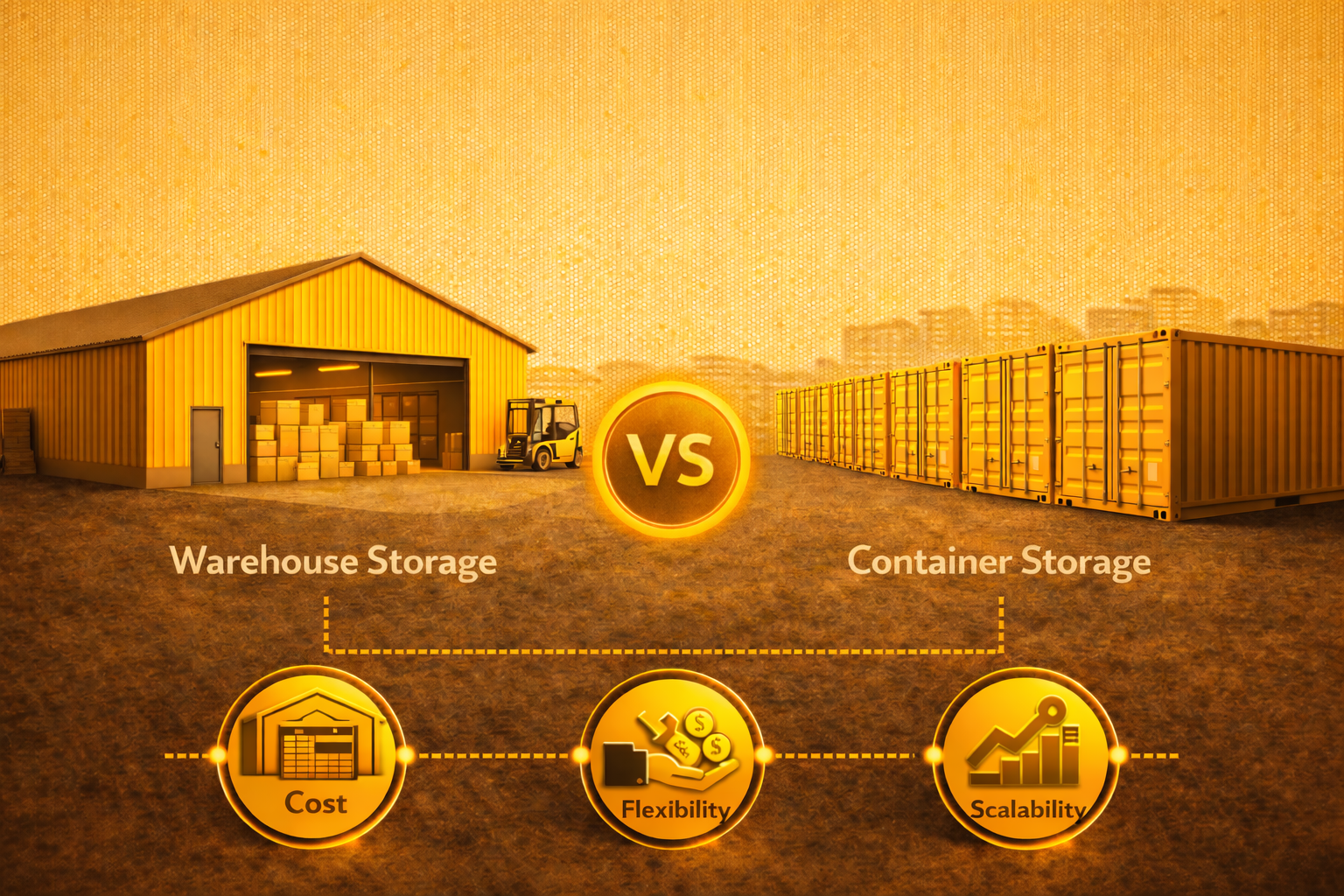
Two of the most common options businesses consider are warehouse storage and container storage. At first glance, they may seem similar. Both offer secure places to store goods outside your primary workspace. But in practice, they serve very different needs.
Warehouse storage has been the traditional choice for decades, especially for businesses with large inventory volumes and complex logistics. Container storage, on the other hand, has grown rapidly in popularity due to its flexibility, affordability, and simplicity.
This guide will help you understand the differences clearly. By the end, you will know which storage option aligns best with your business model, budget, and operational needs.
Warehouse storage refers to storing goods inside a large commercial building designed specifically for storage and distribution. These facilities are often used by wholesalers, retailers, manufacturers, and logistics companies.
Warehouses typically offer structured storage systems such as shelving, pallet racking, and designated storage zones. Many also include staff, handling equipment, and inventory management systems.
Warehouses can store thousands of items across multiple sections. This makes them ideal for businesses with high inventory volume.
Some warehouses offer loading, unloading, picking, packing, and distribution services.
All items are stored indoors, protecting them from weather conditions.
Advanced warehouses provide tracking systems to monitor stock levels.
Warehouse storage is usually the right choice when:
For example, an e-commerce business shipping hundreds of orders daily benefits from warehouse storage because of organized picking and packing systems.
Container storage uses secure shipping containers to store goods. These containers are typically placed within gated storage facilities with controlled access.
Each container functions as a private, self-contained storage unit. You load and unload your goods directly, without relying on warehouse staff.
This model is simple, secure, and cost-effective.
Companies like London Container Storage specialize in providing container storage solutions designed for businesses that want security, flexibility, and control without the higher costs of traditional warehouses.
Each business gets its own container, which reduces the risk of interference.
You can load and unload goods directly from your vehicle. No forklifts or complex logistics required.
Businesses can rent containers for short-term or long-term use.
Storage facilities often include gated entry, CCTV monitoring, and secure locks.
Container storage is usually more affordable than warehouse storage.
Understanding the core differences helps you make the right decision.
Warehouse storage is generally more expensive. You are paying not just for space, but also for facility overhead, staff, and operational costs.
Container storage is more affordable because it offers simple, self-managed storage without additional service layers.
For small and medium businesses, container storage often provides better value.
Warehouse access may be restricted to certain hours. You may also need staff assistance to access your goods.
Container storage allows direct access to your unit. You can load and unload goods quickly and independently.
London Container Storage, for example, provides easy ground-level access, which is especially useful for businesses that frequently move stock.
Warehouse storage can involve longer contracts and less flexibility.
Container storage offers more adaptable terms. Businesses can scale up or down depending on their needs.
This makes container storage ideal for seasonal businesses, startups, and growing companies.
Warehouse storage involves shared space. Your goods may be stored alongside other businesses.
Container storage provides dedicated, private units. Only you control access to your container.
This reduces risk and improves peace of mind.
Warehouses are better suited for extremely large inventory volumes.
Container storage works best for moderate storage needs. However, businesses can rent multiple containers if needed.
This creates scalable storage without the complexity of warehouse contracts.
The answer depends on how your business operates.
Many small and medium-sized businesses find container storage more practical and affordable.
A construction company storing tools and materials benefits from container storage. Workers can access equipment quickly without complex warehouse processes.
An online retailer with steady but moderate stock levels can use container storage to manage inventory affordably.
A growing business can start with one container and add more as inventory increases.
London Container Storage supports businesses in this exact situation by providing secure, accessible container units without long-term commitments or high costs.
Business storage needs have evolved. Flexibility and cost efficiency now matter more than ever.
Container storage meets these needs by offering:
It removes unnecessary complexity while still providing professional-grade security.
For many modern businesses, container storage is the smarter choice.
London Container Storage has built a strong reputation by offering secure, reliable, and flexible container storage solutions for businesses across London.
Their facilities are designed to meet real business needs, with features such as secure access, well-maintained containers, and flexible rental options.
Businesses trust them because they combine simplicity with professional-level security and reliability.
Instead of paying for warehouse services you may not need, container storage allows you to store goods efficiently and affordably.
Warehouse storage is used to store large volumes of inventory, goods, and materials inside a commercial facility. It is commonly used by manufacturers, wholesalers, and large retailers.
Yes. Container storage is typically more affordable because it does not include additional services such as handling staff or inventory management systems. Businesses pay mainly for the storage space itself.
Yes. Professional container storage facilities like London Container Storage offer secure environments with gated access, surveillance, and private containers that only the renter can access.
Yes. Container storage can be used for both short-term and long-term needs. Many businesses use it as a permanent storage solution due to its affordability and flexibility.
Choose warehouse storage if you need large-scale logistics support and structured inventory handling. Choose container storage if you want affordable, flexible, and secure storage with direct access and control.
Storage is more than just finding extra space. It directly affects your operational efficiency, costs, and ability to grow.
Warehouse storage remains a strong choice for large-scale logistics and high-volume distribution. It offers structured systems and professional handling that benefit complex supply chains.
Container storage, however, has emerged as the preferred solution for many modern businesses. It offers affordability, flexibility, security, and direct control. It removes unnecessary costs while still delivering reliable protection for your goods.
For small to medium businesses, startups, construction companies, retailers, and growing enterprises, container storage often provides the best balance between cost and functionality.
If you are evaluating storage options and want a secure, flexible solution that fits your business needs, exploring container storage with experienced providers like London Container Storage can help you make a confident and informed decision.